Case study · 2026

From spreadsheets to a live app, built with AI.

A Gold Coast removals company was running every job on spreadsheets. I designed and built a delivery tracking app with Claude that the owner, office and field staff now use every day, with photo evidence for every item and progress clients can see for themselves.

Client A Smooth Move RemovalsRole Product design, build and ongoing supportLive since July 2026
~2 wksfrom first conversation to a working app in use
10+user accounts across owner, office and field staff
900+items tracked across interior design projects
300+confirmed deliveries, each with a record
The problem

Everyone was working off spreadsheets.

A Smooth Move Removals collects and delivers furniture and fit-out items for interior designers. A designer works with their client, and the business uses its trucks to pick up items from suppliers and deliver them to the home or site. One project can involve hundreds of items arriving over weeks.

The owner, the office and the field staff were all tracking this manually in spreadsheets. That caused ongoing pain:

  • Time. Updating, chasing and reconciling spreadsheets ate into everyone's day.
  • Accountability. It was hard to see who had picked up or delivered what, and when.
  • Item safety. When something arrived damaged there was no reliable record of its condition along the way.
  • Visibility. With many designers and projects running at once, nobody had a single view of what was outstanding.
What I built

One app for the office, the trucks and the client.

I scoped the workflow with the owner, then designed and built the app myself using Claude as my development partner. It was live and in use within a couple of weeks, including time to iron out bugs with the team on real jobs.

ClaudeNext.jsSupabaseVercel

Projects by designer and client

Every job sits in its own project with a live progress bar, so the office can see what's outstanding across all designers at a glance.

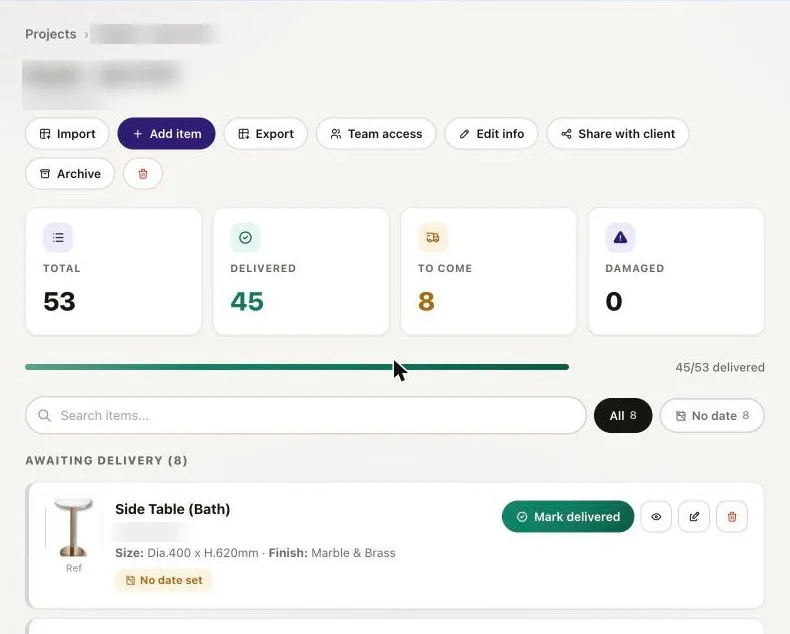
Photo evidence from any device

Field staff photograph items on whatever phone or tablet they have. Breakages are logged with photos, so issues are backed by evidence, not memory.

Mark delivered, in the field

Items are marked delivered or damaged on the spot, with who did it and when. That gives the business the accountability the spreadsheets never could.

Share with client

Designers and their clients can see delivery progress for themselves. It saves everyone time and has become a selling point for the business.

Import, export and search

Item lists can be imported in bulk and exported as reports. Search runs across every project.

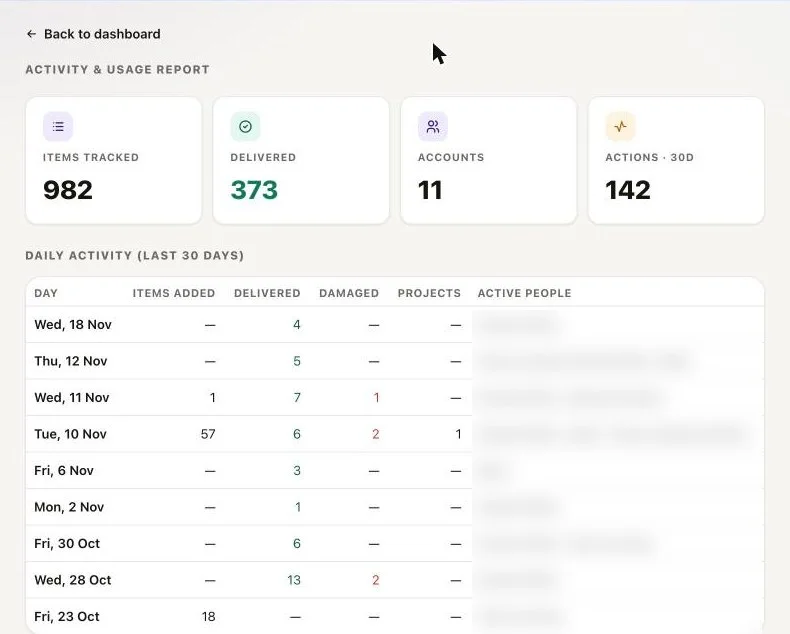
Activity and usage reporting

A daily log of items added, delivered and damaged, and who was active, so the owner can see how the team and the jobs are tracking.
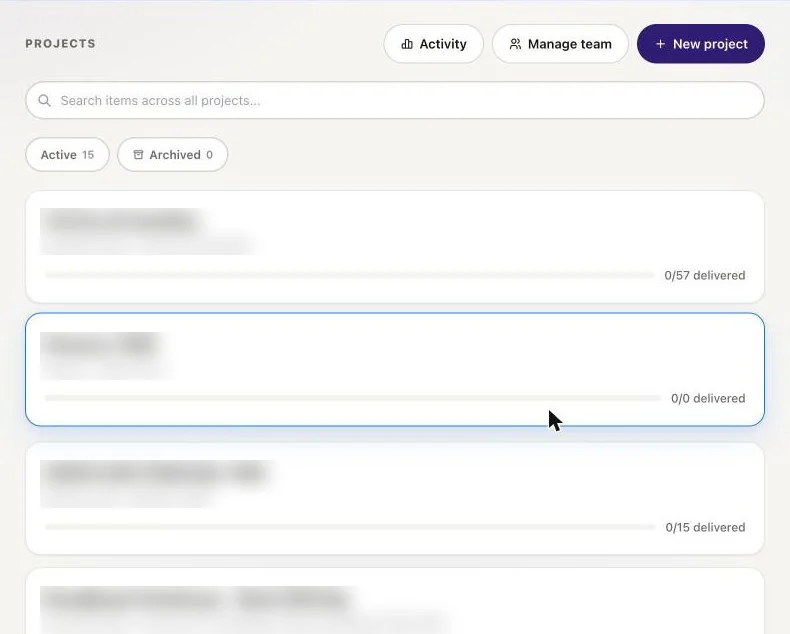
Projects dashboard showing active jobs with delivery progress bars
Projects dashboard. Customer names blurred.
Project detail with totals for delivered, to come and damaged, and item cards with photos
A project: totals, progress and item cards with photos and specs.
Activity and usage report with daily deliveries and damage
Activity report, including damage tracking. Staff names blurred.
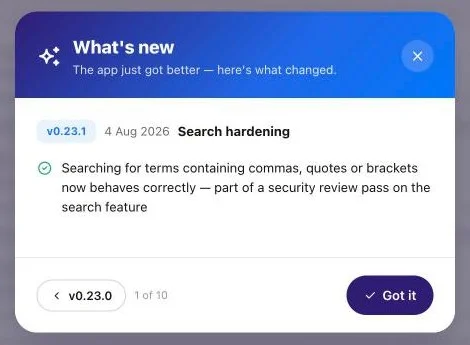
What's new release notes panel showing version 0.23.1
Release notes in the app. 10 tracked releases so far.
Results

In daily use, and still growing.

The team has used the app consistently since it launched in July 2026. The spreadsheets are gone.

For the business: time back for the office and owner, clear accountability for every pickup and delivery, and photo evidence when an item is damaged. Client sharing has become part of how they sell their service to interior designers.

Since launch: 10+ user accounts, 900+ items and 300+ deliveries tracked, across 10 releases of improvements. I still support the app, and the team keeps asking for more features, which is the best sign it's working.

Why it matters

I don't just market technology. I build it.

This project is how I work: listen to the business, find the real problem, and ship something people actually use. AI let me go from a conversation to a production app in weeks. That's the same mindset I bring to marketing teams adopting AI in their own workflows.

Next case studyOutbreak Marketing: founding and selling an agencyOutbreak Marketing →